I currently work on Windows, where our team focuses on making your PC experience more powerful and delightful with AI, while also scaling new tooling across the studio.
I'm a self-taught designer with an engineering background, specializing in simple and effortless experiences for both the devices we use today and the ones we'll use in the future. Crafting high-quality products that people love to use is my passion, and I work tirelessly to achieve that goal.
Using the medium of motion and rapid prototyping I bring these experiences to life, visualizing the smallest interactions to entire user journeys. I strongly believe in open design, and encourage co-creation that can help deliver a better solution for users.
Accessibility and inclusion sit at the center of my process — technology should empower everyone and nobody should be left with a subpar experience.
I'm currently a Senior Designer at Microsoft, where I currently work on Windows AI.
Previously a Design Intern at Microsoft, where I was involved with products used by millions of people around the world. Check them out: Surface Duo, SwiftKey, Fluent Icons. Before that, I worked independently on critically acclaimed concepts both by myself and friends.
BSc Computer Science graduate — First Class Honours.
Awarded 2018-19 Microsoft MVP (Most Valuable Professional) for Windows Design.
A Fluent-native first-party podcasts app for Windows.
Not affiliated with Microsoft
Podcasts app concept isn't affiliated with Microsoft. Concepts and mockups shown do not represent any product plans past, present, or future.
Windows has consumer ambitions, but its first-party app shelf has a few holes that other platforms quietly filled years ago. Podcasts is one of them. There are good third-party clients but no first-party experience that feels of a piece with the rest of the OS, and no clear default for the user who's just bought a Surface and wants to subscribe to a show.
This concept designs that app: Fluent-native, audio and video in one place, integrated with the Windows surfaces a user already knows.
Listen now
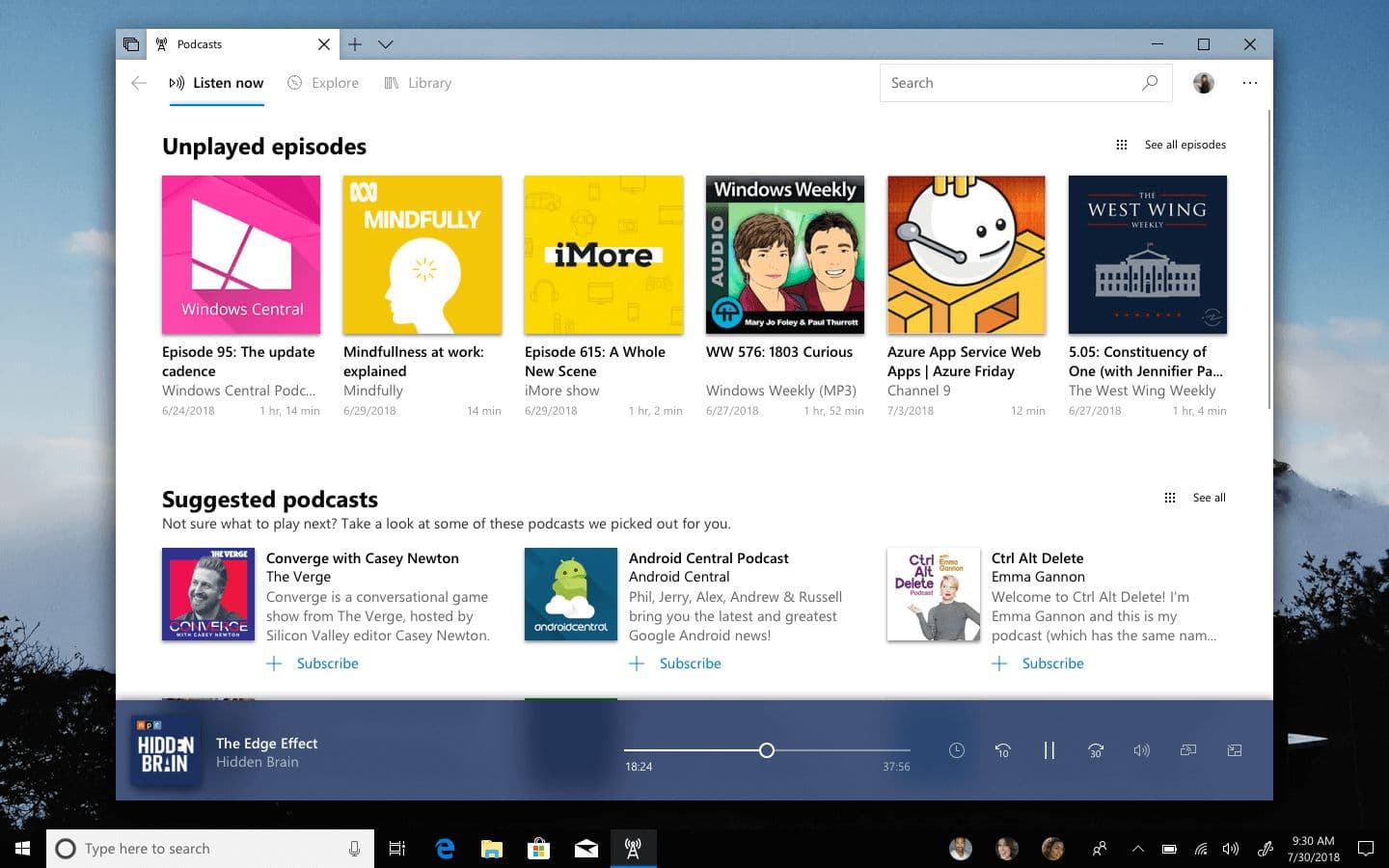
Listen now is the entry point. Episodes the user hasn't played yet from the shows they subscribe to, followed by suggestions of new podcasts they might enjoy.
Listen now, showing unplayed episodes and suggested podcasts.
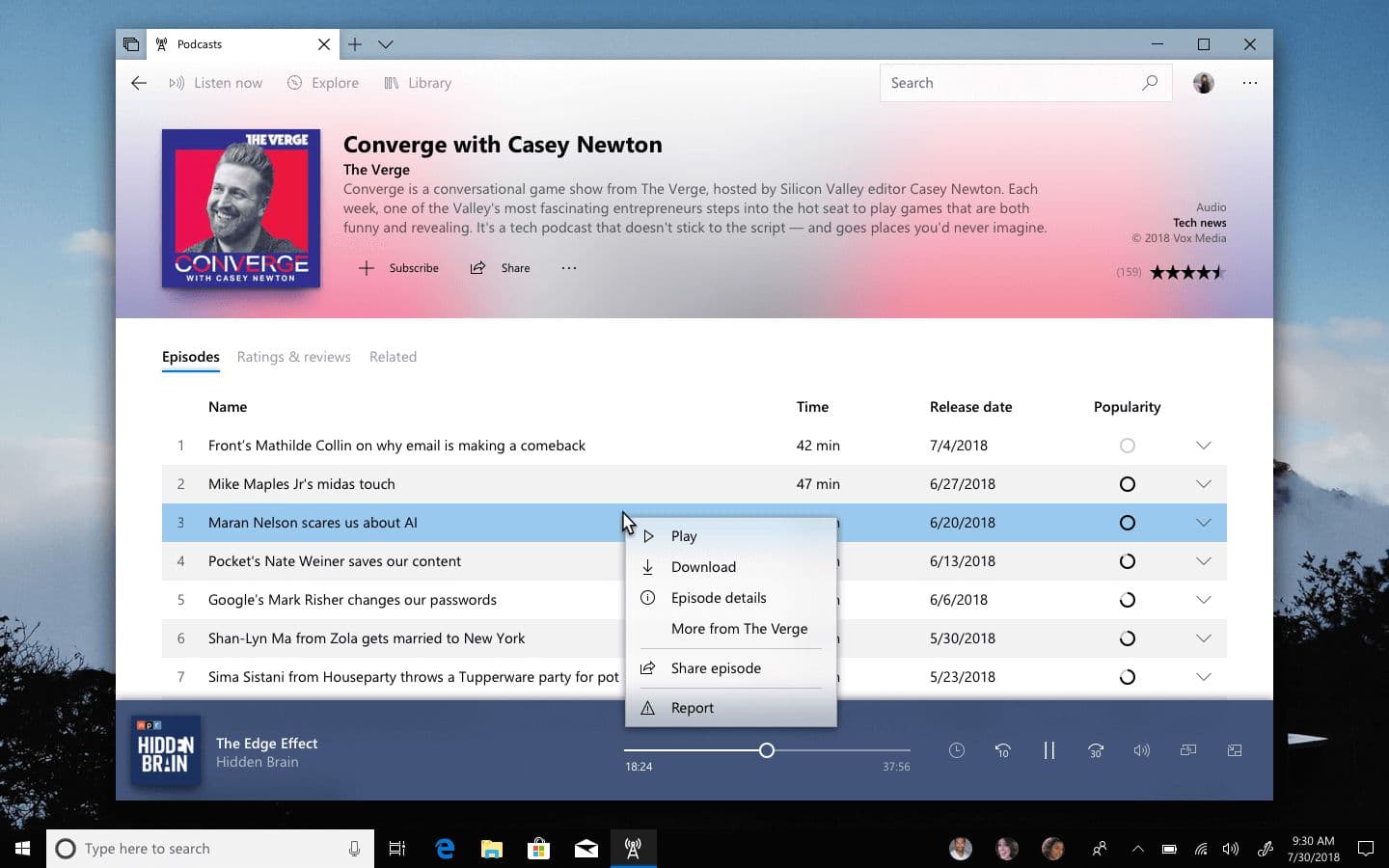
Tapping a podcast opens its info page; tapping an episode plays it; right-clicking an episode reveals the full set of actions a user might want: download for offline listening, share, view details, or report. Putting those additional options behind a context menu rather than visible chrome keeps the surface quiet for the 90% case (just play it) without hiding the 10% case from the users who want it.
A podcast info page with the episode context menu open.
Search
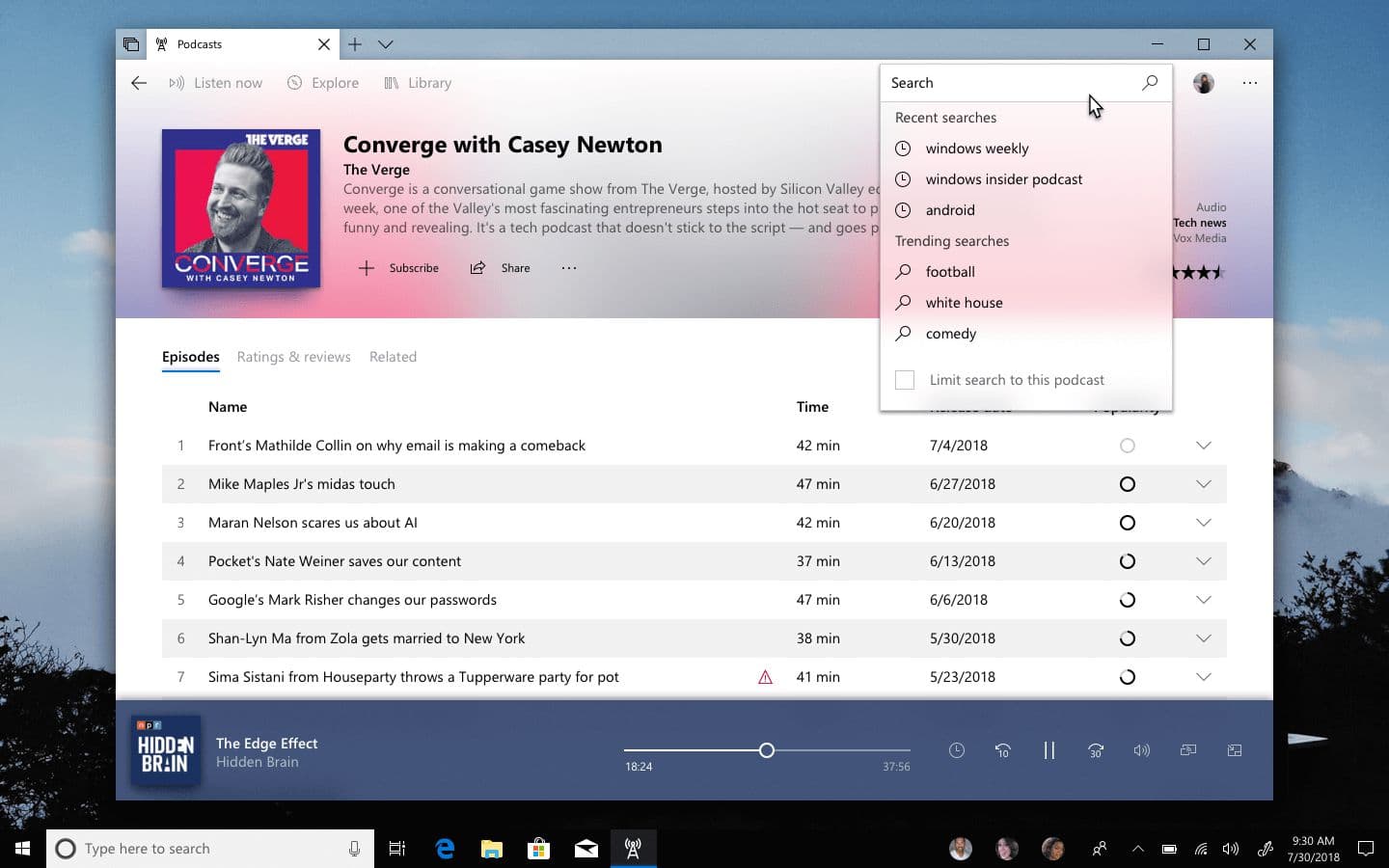
Search is global by default. Just type a query and the catalog responds. Recent searches surface first, and trending searches sit below them, which gives new users a path into the app without needing to already know what to look for.
Recent searches sit above trending searches.
One small detail: on certain pages, search can be scoped to the current context. On a podcast info page, that means only the episodes of that podcast get searched. The default is global because that's what users expect; the scoped option exists because sometimes the user actually wants to find a specific episode.
Explore
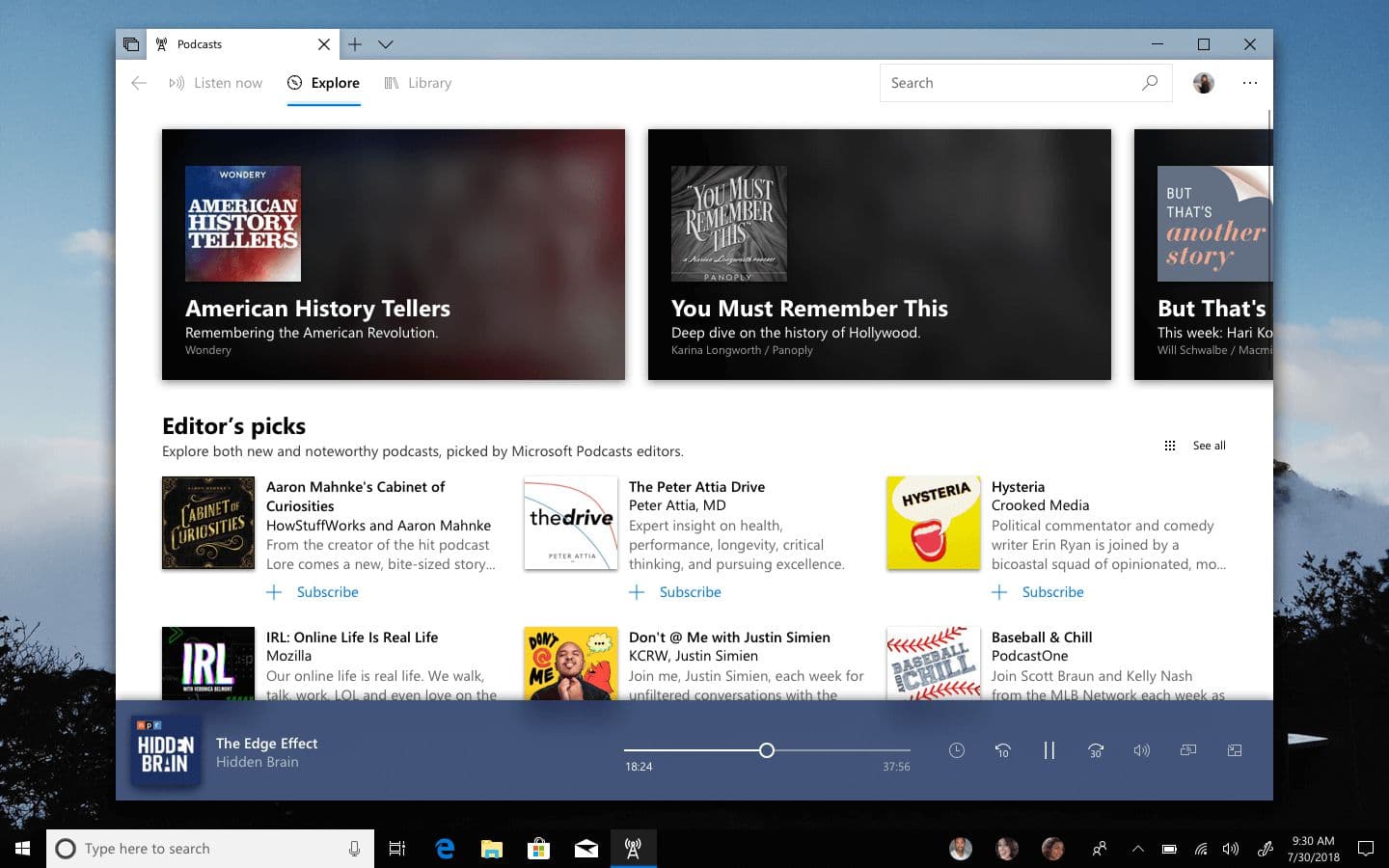
Explore is for discovery. Curated editorial picks alongside algorithmic suggestions based on listening history.
The Explore tab with featured podcasts and editor picks.
Browsing by publisher or by category sits below the featured row, for users who already know roughly what they're looking for.
Video
Video podcasts aren't a tangent. They're a category that's growing, and any app that only handles audio is asking users to keep a second app open to cover the rest.
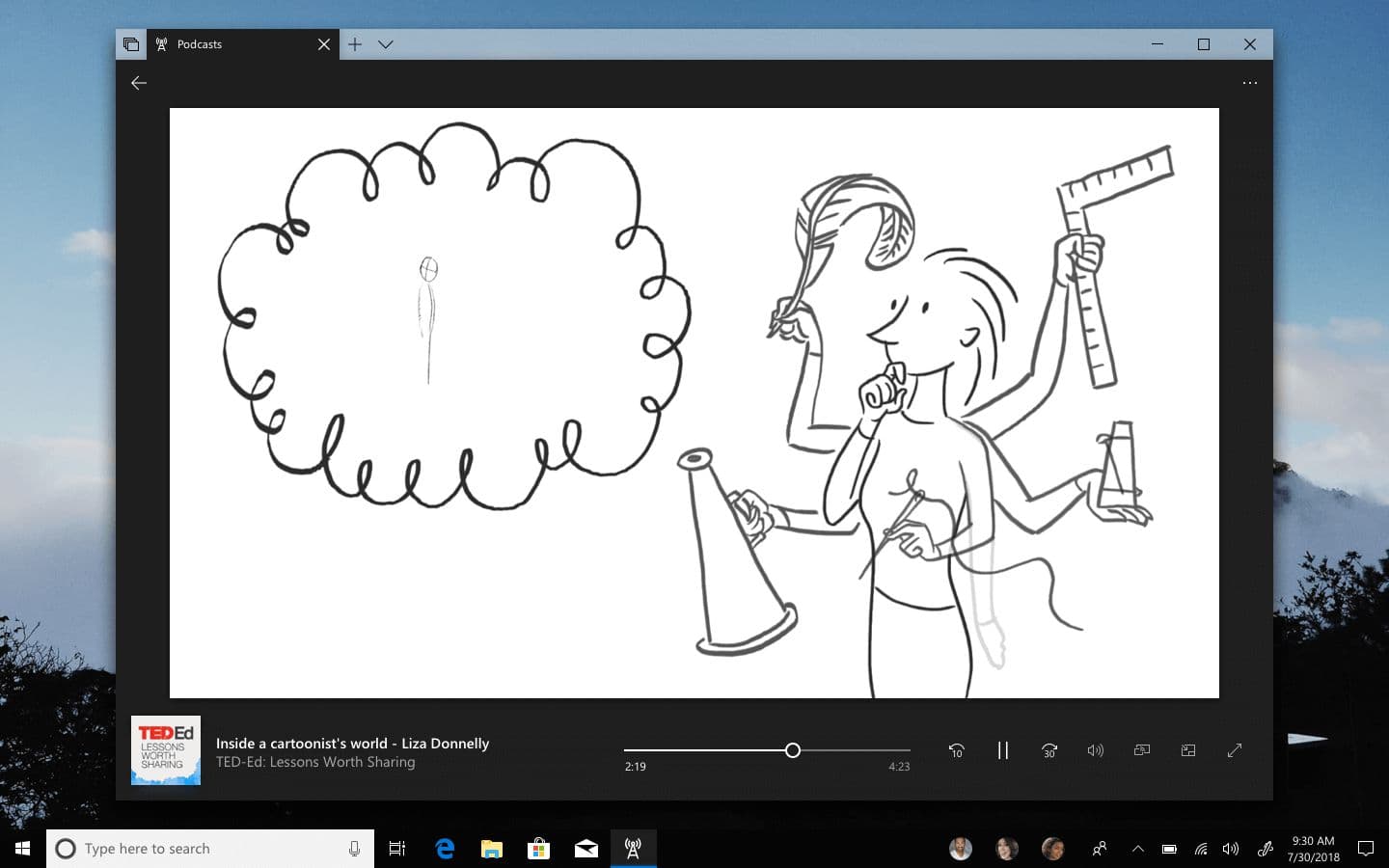
A video podcast playing, with a darker chrome than the rest of the app.
The video player uses a darker chrome to push focus to the content, but the navigation and library structure are the same as for audio. Subscribing, downloading, and history all behave identically. The point of a first-party app is that it's the single place. Splitting audio and video into separate surfaces would undermine that.
System integration
Podcasts live in the background of a user's day. They're playing while the user is doing something else.
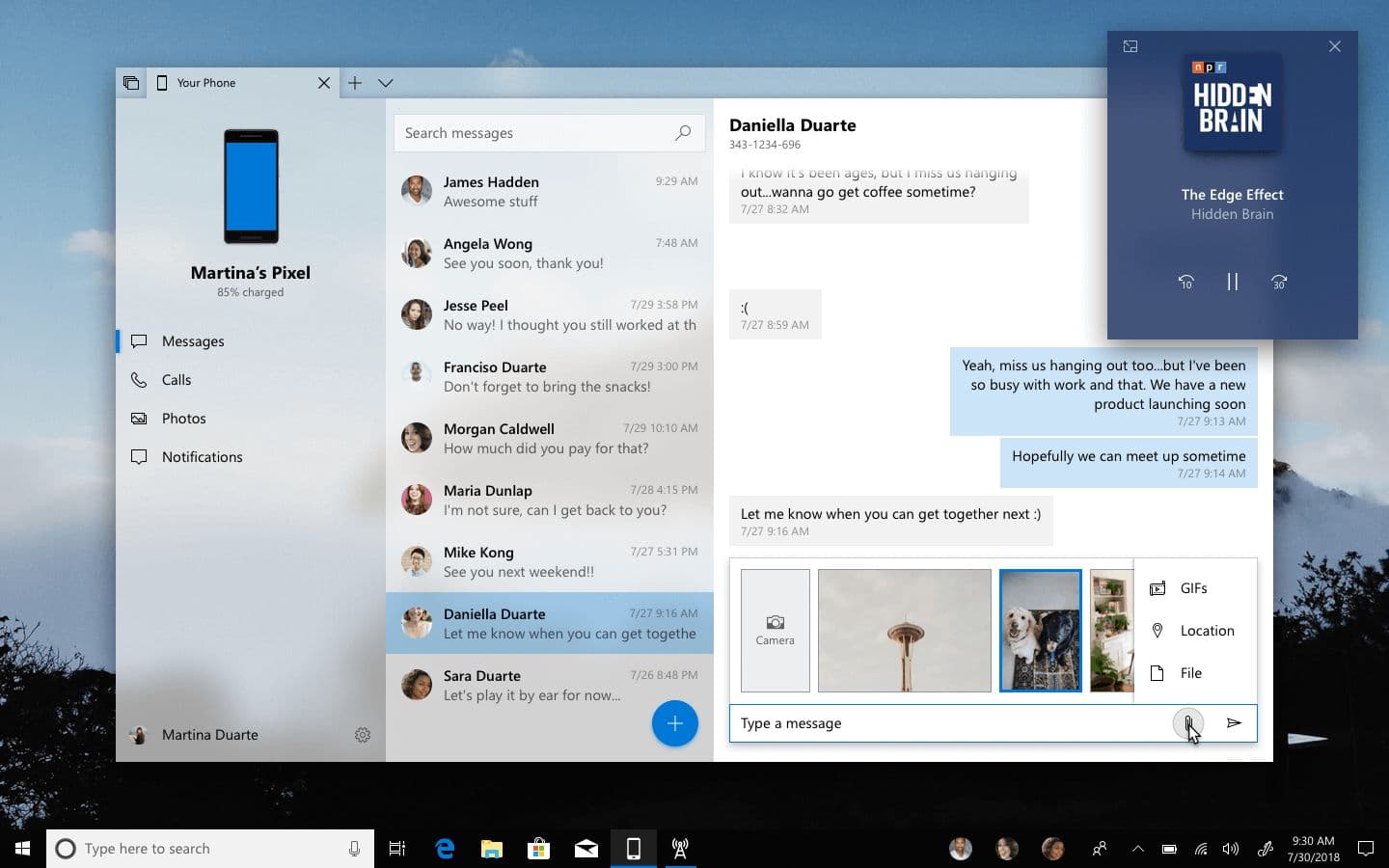
The Podcasts app shrunk into the top-right corner over a Your Phone window.
Both audio and video can shrink into a Compact Overlay, Windows 10's persistent floating window pattern, keeping playback controls one click away without occupying the primary workspace. The overlay uses Acrylic material tinted by the artwork of whatever's playing, so the chrome reflects the content without needing extra labeling.
Features like this are how the app earns its position as the first-party default: integrating with the surfaces familiar to Windows users, rather than living as a standalone island the way most third-party apps do.